Why Dubai Chocolate is Taking Over the World
· 4 min read
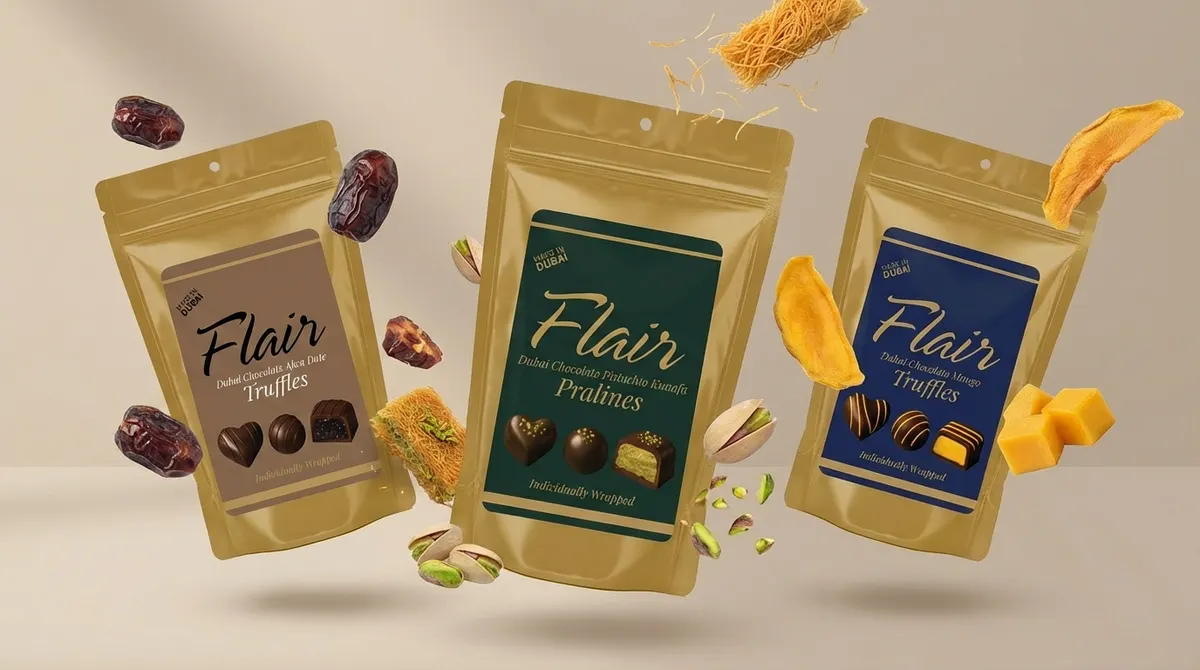
From pistachio kunafa to luxury truffles — explore how Dubai chocolate became a global sensation and how Flair brings it to you.
Introduction
A few years ago, almost nobody outside the UAE had heard of kunafa chocolate. Today there are knock-offs in supermarkets in Tokyo, London, and São Paulo. There are TikTok recipes with millions of views. There are pistachio shortages.
How did a chocolate bar from a small Dubai brand end up changing the global confectionery industry?
It's actually a more interesting story than it looks.
The bar that started everything
If you trace it back, the whole thing began with one woman, one pregnancy craving, and one chocolate bar.
The brand was FIX Dessert Chocolatier in Dubai. The founder, Sarah Hamouda, wanted a snack that combined the kunafa she loved with something more portable. She came up with a thick chocolate bar filled with shredded toasted kunafa pastry and pistachio cream. She called it "Can't Get Knafeh of It."
For a while it was just a Dubai thing. A small batch product, available through Deliveroo, sold out within hours every drop day. Locals knew about it. Influencers in the UAE talked about it. But globally? Almost nobody.
Then in late 2023 a TikTok video happened.
How one video changed everything
Maria Vehera, a food content creator, posted a clip of herself eating the FIX bar. The video was simple. Just her snapping the bar open, eating it, reacting to the texture.
It got 50 million views.
What happened next is the part most people don't see. Within weeks of that video going viral, every major chocolatier in the world started getting questions about pistachio kunafa bars. Bakeries in London were trying to recreate it from photos. People in California were paying USD 200 for one bar shipped from Dubai. The FIX website crashed multiple times.
By mid-2024 it stopped being a niche Dubai dessert and became a category. Every chocolate brand with any sense started developing their own version.
Why this trend is different from the others
Plenty of food trends go viral on TikTok every year. Cloud bread. Whipped coffee. Baked feta pasta. Most of them last about three months and disappear.
Dubai Chocolate hasn't disappeared. It's been over two years and the demand is still growing. Why?
A few reasons.
It looks incredible on camera. Food trends live or die on how good they look in a fifteen second clip. The crack of the chocolate, the pull of the cream, the crunch of the kunafa. All of it is made for video. You couldn't design a better TikTok product if you tried.
It actually tastes good. Some viral foods are just visual gimmicks. This isn't one of them. The combination of flavours and textures is genuinely delicious. People keep buying it because they want to eat it, not just film it.
It bridges cultures. Kunafa is a centuries-old Middle Eastern dessert. Filled chocolate bars are a European tradition. Putting them together created something that felt both familiar and exotic depending on where you were from. That's a powerful combination.
It's expensive enough to feel special. A premium Dubai Chocolate bar costs more than an ordinary chocolate bar but less than a fancy box of pralines. That puts it in the "affordable luxury" category, exactly the price point that does well in modern social commerce.
The pistachio crisis nobody saw coming
Here's something that didn't make headlines until recently. The Dubai Chocolate trend caused a global pistachio shortage.
When suddenly hundreds of brands worldwide started buying pistachios in bulk to make their own kunafa chocolate bars, the supply chain couldn't keep up. Iran, the world's biggest pistachio producer, raised prices by nearly 40% in 2025. American producers in California followed. Smaller chocolatiers started complaining they couldn't get pistachios at any price.
A small filled chocolate bar from Dubai had moved global commodity markets. That's how big this trend got.
What's next for Dubai Chocolate
We think there are three directions this is going.
Format diversification. It's not just bars anymore. Croissants, lava cakes, ice creams, donuts, drinks. Anything that can absorb the kunafa-pistachio combination is getting it.
Premium vs accessible split. The market is splitting into two. The original FIX-style premium tier where you pay for handmade scarcity, and an accessible tier for people who just want to enjoy the flavour without the queue.
Regional adaptation. Different countries are starting to adapt the recipe to local tastes. In the UAE, brands like Flair have added Ajwa date and mango variations. In Asia we're seeing matcha versions. This kind of regional remixing is what keeps a trend alive long-term.
How Flair fits into this
We launched Flair to be in that accessible tier. Premium quality, made in Dubai, but priced for everyday snacking instead of special occasions.
Our flagship is the Pistachio Kunafa Truffles bag. It's the closest experience to the classic Dubai Chocolate, but designed to share with friends instead of being one big bar. We also do Mango Truffles, Ajwa Date Truffles, and croissants in the same flavour family.
If you want to try them, you can shop Flair here.
The bottom line
Dubai Chocolate started as one woman's pregnancy craving and ended up reshaping how the world thinks about chocolate. That's a wild story. And it's not over.
If you haven't tried any version of it yet, this is the time. The prices have stabilised, the quality at every tier has improved, and there are way more options than there were even a year ago. Start with something premium-but-accessible like Flair, see if you like the flavour, and go from there.