From Classic to SMASH: How the Croissant Got Interesting
· 4 min read
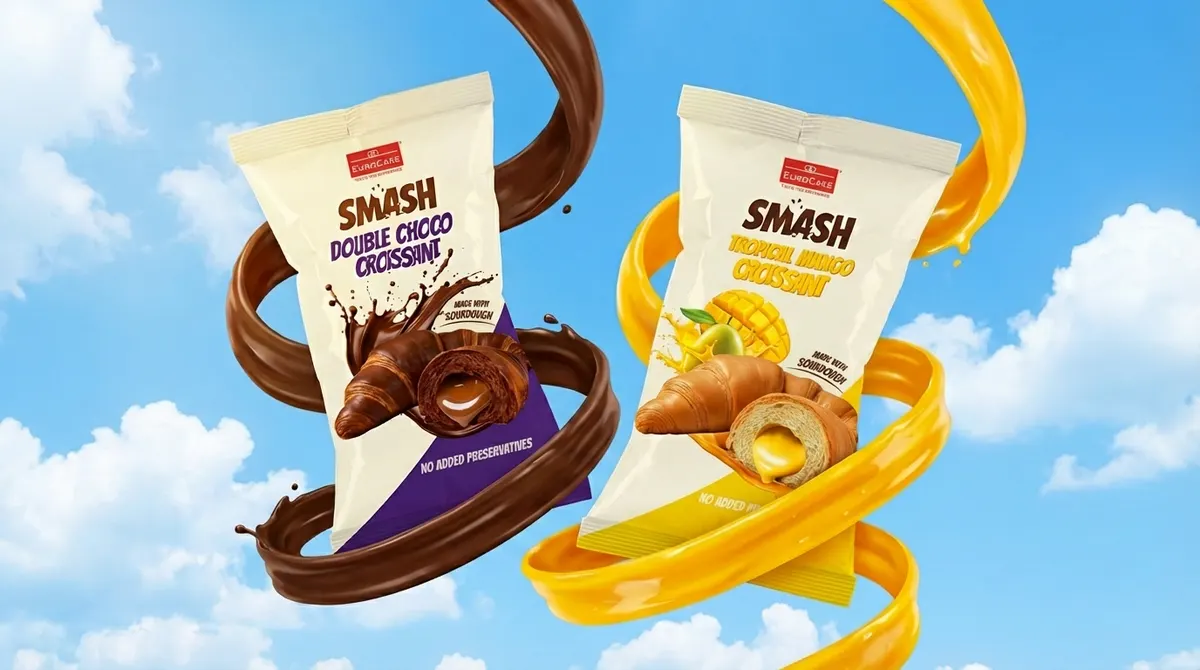
Trace the croissant's journey from Parisian bakeries to the bold, flavor-packed SMASH croissants redefining the game.
Introduction
Let's talk about croissants for a minute.
For something like 200 years, the croissant barely changed. You had butter, flour, yeast, and patience. That was it. You folded the dough, you let it rest, you baked it, you ate it warm with coffee. End of story.
Then the last decade happened. And the croissant got weird in the best possible way.
This is the story of how a French breakfast staple became a global playground for flavour experiments, and how SMASH became part of it.
The classic era
First, some respect for the original.
The croissant as we know it came together in Paris in the 1800s. The basic concept was Austrian (the kipferl), but the French made it their own with lamination. That technique of folding butter into dough over and over until you get those flaky, distinct layers. A real classic croissant has hundreds of paper-thin layers when you look at it in cross-section.
For most of its history, that was the croissant. Plain. Buttery. Maybe with a sprinkle of sugar or a slice of ham and cheese inside if you were getting fancy.
This is still the version most people picture when they think "croissant." And honestly, when it's done well, it's hard to beat.
The first wave: filled croissants
The first real evolution came from filled croissants. Almond filled. Chocolate filled. The classic French boulangeries had been doing these forever, but they started becoming mainstream in the 1990s and 2000s.
This was a small change but a meaningful one. Suddenly the croissant wasn't just bread anymore. It was a dessert. Or breakfast. Or a snack. The format was flexible.
In the Middle East, this is where Eurocake entered the picture. If you grew up in the UAE in the 1990s or 2000s, you almost certainly ate a Eurocake croissant at some point. Filled with chocolate or hazelnut, individually wrapped, available at every supermarket. They became a regional staple. They still are.
The second wave: the cronut moment
In 2013, a New York pastry chef called Dominique Ansel created the cronut. A croissant-donut hybrid. People queued for hours to buy one.
This was a turning point. Not because the cronut itself became huge globally, but because it broke the rule that croissants had to be traditional. Suddenly chefs everywhere started experimenting. Croissant bagels. Croissant ice cream. Croissant pizza. Some of these were good. Most were forgettable. But the door was open.
The third wave: flavoured everything
Around 2020, social media took over the croissant conversation. If you've been on Instagram or TikTok in the last few years you've probably seen them. The "cube croissants" from Singapore, the "round flat" supreme croissants from New York, the matcha croissants from Tokyo.
The croissant became less of a baked good and more of a vehicle for flavours. People wanted bold, photographable, instagram-worthy fillings. Pistachio. Lotus biscoff. Salted caramel. Dubai chocolate.
This is the era we're in now. And honestly it's been good for croissants. There's more variety, more creativity, and more reasons to try new things than there's ever been.
Where SMASH comes in
We launched SMASH because we wanted to make this kind of bold, fun, social-media-friendly croissant accessible. Not in a coffee shop in Dubai Marina where you pay AED 35 for one croissant. In a supermarket. For a few dirhams.
The SMASH range includes croissants with crazy fillings: chocolate hazelnut, mocha, mango, matcha, banoffee. Each one is individually wrapped, fresh, and built around big bold flavours that hit you on the first bite.
We also do brownies (the SMASH Brownie Bites and the Brownie Crisps) for the same reason. Because there's no good reason your daily snack has to be boring.
If you want to try them, you can shop SMASH here.
What's next for the croissant
We think the next wave is going to be fusion. Croissants that pull from regional cuisines: kunafa croissants, ube croissants, halva croissants. We're already seeing it.
We also think there's going to be a swing back to classics. After years of crazy flavours, some people want a perfect plain butter croissant again. Both can exist. Both should exist.
The bottom line
The croissant has gone from a strict French tradition to a global flavour playground in about ten years. That's a lot of change for something that didn't change at all for 200 years before that.
If you've only been eating plain croissants your whole life, try a SMASH one. And if you've only been eating crazy flavoured ones, try a perfect plain butter one from a real bakery sometime. Both are great. The croissant is having a good decade.