What is Dubai Chocolate? Everything You Need to Know (2026)
· 7 min read
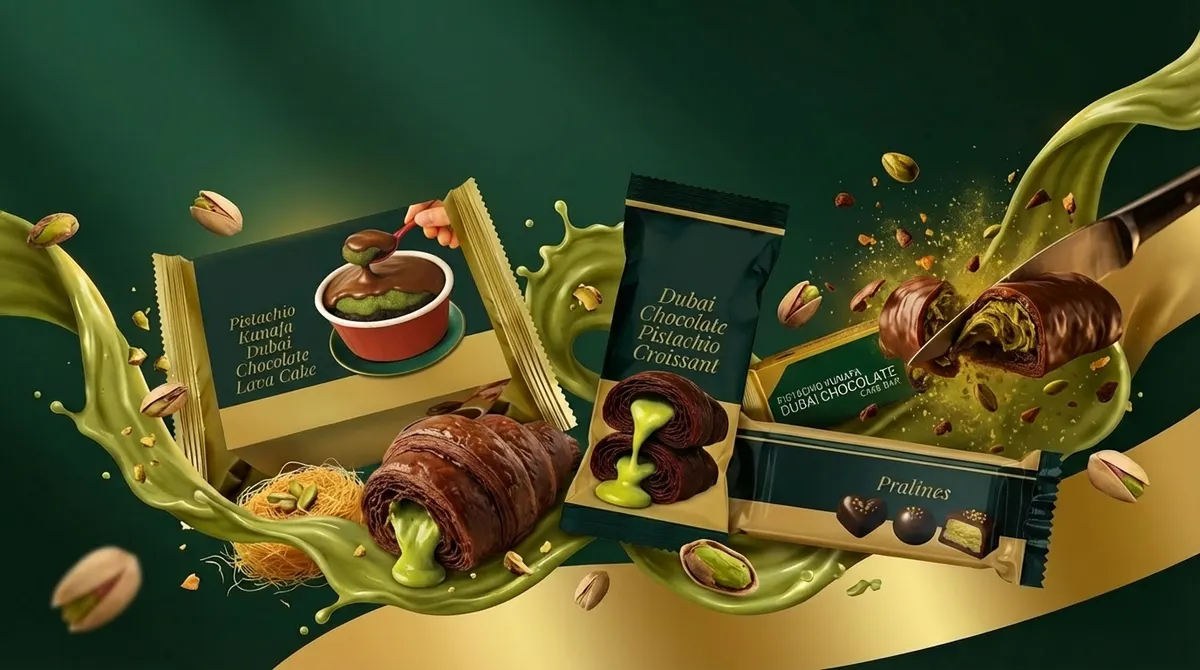
Discover what Dubai Chocolate really is, why it went viral, and where to buy authentic pistachio kunafa chocolate in the UAE. Complete 2026 buyer's guide.
Introduction
You've seen the videos. Someone holds a thick, golden-green chocolate bar, snaps it in half, and a thread of pistachio cream stretches between the two pieces while shredded kunafa crunches in the background. The clip gets 4 million views overnight.
That's Dubai Chocolate. And by now, it's everywhere.
But what is it actually? Why did it blow up? And if you live in the UAE, where do you buy the real thing without queuing for two hours or paying tourist prices?
Let's get into it.
So what is Dubai Chocolate, exactly?
At its core, Dubai Chocolate is a thick filled chocolate bar with three things inside: premium chocolate on the outside, crispy kunafa pastry in the middle, and a generous layer of pistachio cream tying it all together.
The crunch is the magic. That first bite where the chocolate cracks, then your teeth hit the toasted kunafa, then the pistachio cream takes over. It's textural and rich and completely different from anything you've had before.
Worth saying: Dubai Chocolate isn't one specific recipe owned by one brand. It started that way, but it's become a whole category now. Different chocolatiers do their own version, with their own twists.
How a pregnancy craving became a global obsession
Here's where it gets interesting.
The original Dubai Chocolate came from a small Dubai brand called FIX Dessert Chocolatier. The founder, Sarah Hamouda, was pregnant and craving kunafa. She had the idea of putting that flavour into a chocolate bar and called it "Can't Get Knafeh of It."
For nearly two years, basically nobody outside Dubai knew about it. You could only order it through Deliveroo, only on certain days, and only if you got there fast enough before they sold out.
Then in late 2023, a food blogger called Maria Vehera posted a video on TikTok. Just her trying the bar, snapping it, eating it. Nothing fancy.
That clip changed everything.
Within weeks FIX's website crashed from demand. Influencers started flying to Dubai just to film themselves buying it. Pistachio prices started climbing globally because suppliers couldn't keep up. Every chocolatier in the world tried to make their own version.
By 2026 it had stopped being a Dubai thing. It was just a thing. You could find some version of it in supermarkets in London, New York, Berlin, and Tokyo.
Why did this trend actually stick?
Most viral food trends die after a few months. This one didn't. There are a few reasons.
The first is obvious: it looks incredible on camera. The snap, the cream pull, the crunch. It's basically engineered for social media. You don't even need to be a content creator to make it look good.
Second, it was hard to get. Scarcity makes people want things more, and the original FIX bars were genuinely impossible to find for most people. That made every successful purchase a kind of trophy.
Third, the flavour just works. Pistachio with chocolate is a combination that's been around forever, but nobody had really nailed the texture before. The crunch from the kunafa is the part nobody can replicate at home easily.
And finally, there's the cultural angle. Kunafa is a traditional Middle Eastern dessert that's been around for centuries. Chocolate bars are a modern global format. Putting them together created something that felt familiar and new at the same time. People liked that.
Wait, isn't this just kunafa with chocolate?
Sort of, but not really. People mix these up all the time, so let's clear it up.
Kunafa is a hot dessert. You eat it with a fork off a plate, usually after a meal, often at celebrations. It's made with shredded pastry and sweet cheese, baked, and drizzled with syrup. It doesn't keep. You eat it the day it's made.
Dubai Chocolate is a cold chocolate bar. You snap it open, eat it from your hand, take it with you. It uses kunafa as an ingredient, but the format is completely different. It also lasts weeks in your pantry instead of hours.
So Dubai Chocolate isn't a replacement for kunafa. It's more like a portable version that you can eat anywhere, anytime. Same flavour family, different occasion.
Where to actually buy it in the UAE
This is the question most people end up here for. Right now there are basically three price tiers in the UAE market.
The original tier (AED 60 to 100+). This is the FIX bar and a few other small Dubai chocolatiers. It's handmade, tiny batches, and you have to plan ahead to get one. If you want the original experience and don't mind paying for it, this is where you go. Just know it can be hit or miss depending on stock.
The premium brand tier (AED 25 to 50). This is the sweet spot for most people. Brands like Flair (which we make) sit here. You get the same flavour profile, premium ingredients, halal certification, and you can actually order it whenever you want without queuing. Available for delivery across the UAE.
The supermarket tier (AED 10 to 20). Carrefour, Lulu, and Spinneys all have their own versions now. The quality varies a lot. Some are decent, some really aren't. Worth trying once if you're curious but don't expect the same experience as the higher tiers.
A bit about Flair (since we make it)
We started Flair because we wanted to make Dubai Chocolate accessible. Not in a cheap way, but in a "you shouldn't have to wait two hours and pay AED 80 to enjoy this" way.
Flair is made in our Dubai facility, the same one where we make all our other brands. It's halal certified, HACCP and ISO 9001 certified, and it ships fresh anywhere in the UAE.
The range right now includes:
- Pistachio Kunafa Truffles, the flagship, and the closest thing to the classic Dubai Chocolate experience
- Mango Truffles, a tropical twist that's become surprisingly popular
- Ajwa Date Truffles, using actual Madinah dates with the chocolate
- Pistachio Kunafa Croissants, for when you want the same flavour at breakfast
If you want to try them, you can order direct from us and skip the marketplaces.
Quick answers to the questions we get a lot
Is Dubai Chocolate halal? Most UAE-made versions are. Always check the packaging to be sure. Flair is fully halal certified.
Why is the original so expensive? Two reasons. It's handmade in small batches, and pistachio prices have gone up globally because everyone is making this stuff now.
Can I order it online? Yes. Flair ships across the UAE through our website and you can also find us on Noon, Talabat, and Amazon.ae.
How long does it last? A premium chocolate bar like this lasts 6 to 12 months if you keep it cool and dry. Always check the date on the packaging.
Is "kunafa chocolate" the same thing? Yes. People use both names. They mean the same thing.
The bottom line
Dubai Chocolate isn't a fad anymore. It's a real category that's become part of how people in the UAE (and now the world) think about chocolate. The good news is you don't have to spend AED 100 or wait in line to try it. There are plenty of options now, at different price points, and the quality at the mid-tier is honestly excellent.
If you've been curious but haven't taken the plunge yet, this is your sign. Try Flair here and let us know what you think.
Frequently asked questions
- Is Dubai Chocolate halal?
- Most Dubai Chocolate brands made in the UAE are halal certified. Always check the packaging — Flair, for example, is fully halal certified.
- Why is Dubai Chocolate so expensive?
- The original FIX bars are handmade in small batches with premium ingredients. Pistachio prices have surged due to global demand. Brands like Flair offer the same flavour experience at a more accessible price point.
- Can I order Dubai Chocolate online in the UAE?
- Yes. Flair is available for direct delivery via dofreeze.ae, as well as on Noon, Talabat, and Amazon.ae.
- How long does Dubai Chocolate last?
- Premium chocolate bars typically last 6-12 months when stored in a cool, dry place. Always check the best-before date.
- Is Dubai Chocolate the same as kunafa chocolate?
- "Kunafa chocolate" is one of the names used for Dubai Chocolate — both refer to chocolate bars filled with kataifi pastry and pistachio cream.